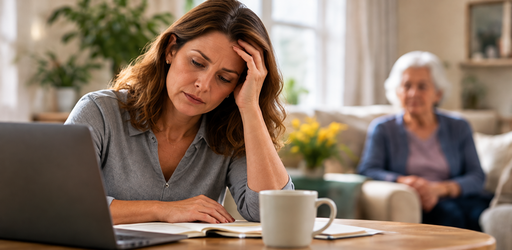
What to Do After a Parent Falls: A Step-by-Step Guide for Families
When an aging parent falls, knowing what to do next can feel overwhelming. Here’s a simple step-by-step guide for the first 24 hours and beyond.

A phone call that begins with “Mom fell” or “Dad had a fall” can make everything else disappear.
Even when your parent is awake, talking, and insisting they are fine, it can be difficult to know what to check, who to call, or what should happen next.
The most helpful thing you can do is stay calm, look for signs of injury, and take the next few steps one at a time.
Here’s a simple guide for the first hours after a fall and what your family can do afterward to make home safer.
Check for injuries before helping them move, watch for changes in alertness or behavior, and think about what may have caused the fall. Seek emergency care for serious symptoms. Once immediate concerns are addressed, look for simple ways to make the home safer.
The First 24 Hours: 3 Things to Check Immediately
1. Check for pain or visible injury
Before helping your parent stand, ask where they hurt.
Look for swelling, bleeding, bruising, or an arm or leg that looks out of position. If they have severe pain, cannot move normally, or you suspect a broken bone, avoid forcing them to stand and get medical help.
2. Check for changes in alertness
Notice whether your parent seems unusually confused, sleepy, dizzy, weak, or unsteady.
If they hit their head, pay particular attention to worsening headache, repeated vomiting, unusual behavior, seizure, loss of consciousness, or new weakness.
3. Think about what caused the fall
Was there a loose rug? A wet floor? Poor lighting?
Ask whether they felt dizzy or weak before falling. Understanding what happened may help uncover something that needs attention before another fall occurs.
When to Call the Doctor vs. When to Go to the ER
Seek emergency medical care immediately if your parent experiences serious symptoms such as:
- Loss of consciousness
- Trouble breathing
- Heavy bleeding
- Severe or worsening pain
- A possible broken bone
- Repeated vomiting
- Seizure
- Sudden confusion
- New weakness or numbness
- Concerning symptoms after hitting their head
If there are no emergency warning signs, contact their doctor if they continue experiencing pain, swelling, dizziness, unusual weakness, or new balance problems.
Even if your parent says they feel fine, tell their healthcare provider about the fall. A fall can sometimes point to medication side effects, changes in vision, strength or balance problems, or another health issue worth reviewing.
How to Talk to a Parent Who Says, “I’m Fine”
For many older adults, admitting that a fall happened can feel like admitting they are losing independence.
Instead of saying: “You can’t be alone anymore.”
Try:
“I’m glad you’re okay. I just want to understand what happened so we can make things a little safer.”
Focus the conversation on helping them stay independent, rather than taking control away.
Ask what felt difficult before the fall and whether there are small changes that would make everyday activities easier.
Sometimes a brighter hallway, a cleared walking path, or a little more help around the home can make a meaningful difference.
Preventing the Next Fall: A Room-by-Room Check
Once the immediate worry has passed, walk through the home with fresh eyes.
Living Room
- Remove or secure loose rugs.
- Clear cords and clutter from walkways.
- Keep commonly used items within easy reach.
Bedroom
- Keep a lamp or light switch near the bed.
- Create a clear path to the bathroom.
- Keep bedding and cords away from the floor.
Bathroom
- Add non-slip surfaces to the tub or shower.
- Consider properly installed grab bars.
- Keep floors dry.
Kitchen
- Keep everyday items within comfortable reach.
- Clean spills quickly.
- Avoid unstable stools or chairs for reaching high shelves.
Hallways & Stairs
- Improve lighting, especially at night.
- Keep stairs free from clutter.
- Check that handrails are secure.
A fall can shake your family’s confidence, but it can also be an important signal.
Once immediate medical concerns have been addressed, look at what may have contributed to the fall and what can be changed.
Fall prevention isn’t about taking away independence. It’s about creating a safer environment where your parent can continue living with confidence.
Download the Free Home Safety Checklist
Not sure where to start?
Use our Free Home Safety Checklist to walk through your parent’s home room by room and identify simple changes that could make everyday life safer.
Make Home Safer, One Room at a Time
Download our free Home Safety Checklist and identify simple changes that may help reduce fall risks at home.
Download the Free Checklist